• by Derrick Kunsman

    A friend texted me recently with this:
    “Blog post idea for ya: falling short of the goal. Trying to help my 8-year-old realize this. She’s likely going to fall short of the 10,000 shots (basketball goal to make 10,000 shots over the summer) and wants to give up completely. Not an easy concept to teach young kids!”

    I responded:
    “Ooh! That’s a tough one for adults!”
    Followed with, “I bet she shot more this summer than any other summer, and can do a little better next year!”

    It reminded me of James Clear’s wisdom:
    “When making plans, think big. When making progress, think small.”

    Falling short doesn’t equal failure. It’s an opportunity to focus on daily habits and incremental growth. One of my favorite examples comes from the British Cycling Team, who embraced the philosophy of improving just 1% every day. Over time, these tiny improvements compounded into world-class performance and multiple Olympic medals.

    For kids and adults alike, progress is built in small, consistent steps:

    • Shooting a few hundred more basketball shots each week than last week.
    • Spending 10 minutes each day improving a skill. Can’t find 10 minutes? Start with two minutes: one page (reading), one push-up (exercise), or a few deep breaths (meditation).
    • Making one better choice today than yesterday.

    Acknowledging that progress, both internally and from others, is incredibly motivating. A simple “I see how much effort you’re putting in” or “Look how far you’ve come!” can reinforce the value of persistence.

    Whether it’s an 8-year-old learning the power of practice, a student tackling a challenging subject, or a leader guiding a team, celebrating small wins keeps motivation alive and reminds us that growth is happening, even when the ultimate goal hasn’t been reached.

    Big goals stretch us. Falling short humbles us. But progress – the daily, 1% better wins – shows us the way forward. And when progress is recognized, it lights the path to keep going.

    So maybe the conversation isn’t about 10,000 shots. It’s about the courage to keep shooting tomorrow, focusing on small habits, getting 1% better each day, and acknowledging every bit of progress along the way.

    Teaching this to an 8-year-old is tough; I struggle with it myself. It’s hard not to throw in the towel when I’m not seeing immediate results or big gains. But the older I get, the more I recognize that consistency, persistence, and the compounding effect of small, daily efforts truly add up.

    My best answer for my friend? Model it ourselves. Celebrate growth and effort. Talk openly about the things we’re doing as adults that are hard and require practice. Progress counts, even when it’s small. And this isn’t just for kids; it applies to all of us. Growth, persistence, and small wins are a lifelong game; and, the more we notice and encourage it in others, the stronger we all become.


    Aligned Leadership | Lead With Purpose. Live With Alignment.

  • by Derrick Kunsman

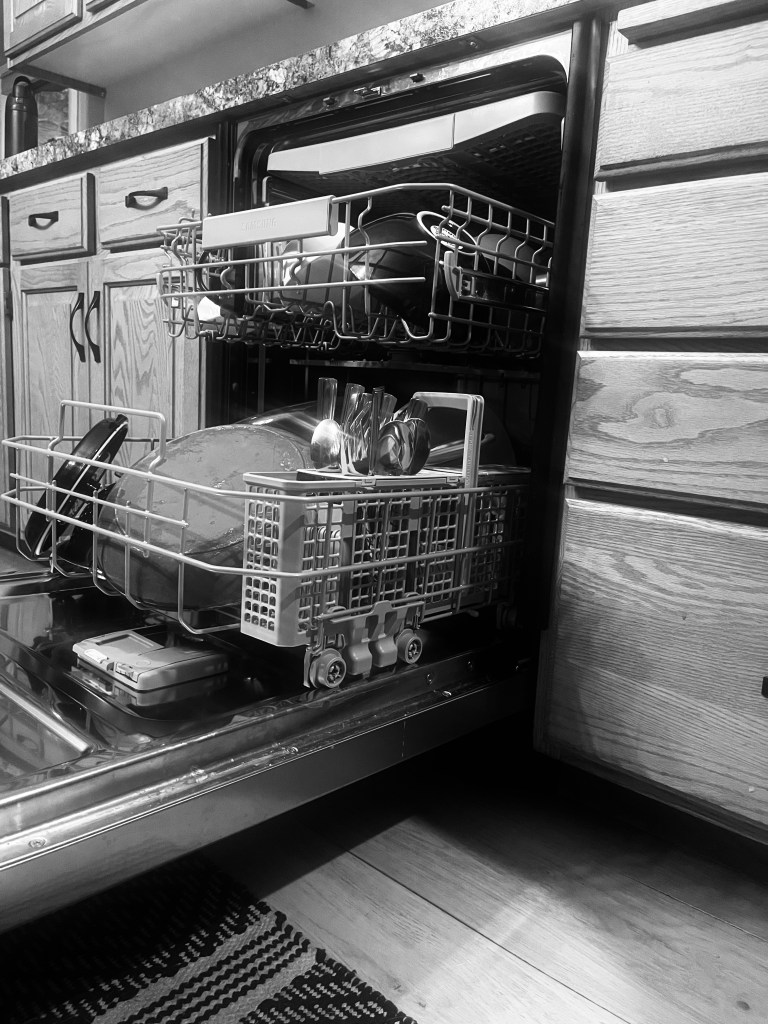
    Some lessons in leadership come from podcasts, conferences, and books. Others… come from standing in my kitchen, staring at a sink full of dishes. I’ve realized that the way I load the dishwasher says a lot about how I lead, and about the comfort zones I still cling to.

    There’s a running joke in my house: No one loads the dishwasher like I do.

    It’s true; I’ve perfected my system. Bowls nested just so. Plates lined up in military precision. Cups facing the same way, ready for the clean water to work its magic. When I’m finished, there’s a sense of accomplishment. A job well done. A clear start and finish.

    And, honestly? I like it. I’m comfortable there. I know exactly what to do, and I do it well.

    But lately, I’ve been trying to be ok with watching the dishes stack up in the sink… not because I’m neglecting them, but because I’ve been forcing myself to focus on other things at home, things that only I can do. 

    It has made me think about the “dishwasher moments” I have at work.

    In school leadership, there are certain tasks that I gravitate toward – not because I have to be the one doing them, but because they’re familiar. Comfortable. Predictable. And, if I’m being honest, they give me that same satisfaction as loading the dishwasher: a quick, tangible win in a world of long-term challenges.

    The problem? Every time I’m elbows-deep in my metaphorical work “dishwasher,” I’m not doing the things only I can do as a leader: casting vision, making strategic decisions, building relationships, and guiding my team toward our Mega Result.

    Choosing the dishwasher is easy. Choosing growth takes discipline.

    Because leadership isn’t about proving I can do everything better than anyone else. It’s about creating the space and trust for others to contribute their best work, while I focus on the things only I can do.

    And I’ll be honest: I’m still learning this. I like my “dishwasher moments.” They feel safe, clear, and satisfying. But I’m realizing that when I catch myself stuck in them, it’s a signal to take a step back, delegate, and lean into the work that stretches me.

    That’s where my real growth, and my real alignment, happens.

  • by Derrick Kunsman

    Lately, I’ve found myself reflecting on the learning process – not just for my kids, but for myself, my team, and honestly, anyone brave enough to try something new.

    I’m not writing this from a mountaintop of wisdom. I’m not here to dish out leadership advice like I’ve figured it all out. I’m just a dad, a principal, and a guy trying to do a little better each day. And lately, I keep thinking about how life keeps bringing us back to the basics.

    Like, learning to walk.

    You remember those early milestones, right? Wobbly first steps. Endless potty training standoffs. The great bike-without-training-wheels adventure (which usually ends with Band-Aids and tears).

    Those moments were messy, drawn-out, and beautifully ordinary. And yet, we treated them like sacred rites of passage. We didn’t rush them. We didn’t compare our kids to the neighbor’s toddler who was already running marathons at 18 months (okay, maybe a little).

    What we did do?

    • We cheered.
    • We were patient.
    • We gave grace.
    • We celebrated tiny wins like Olympic gold.
    • We stayed close enough to catch them but far enough to let them try.

    And here’s the thing I’ve been wrestling with: Why do we stop doing that?

    When our kids grow older and try out for a team, don’t make the varsity cut, or fumble through their first job interview, why do we expect instant progress? And why, when our staff or colleagues don’t nail a goal right away, do we rush to “fix” or “strategize” instead of just… support?

    It’s like we forget that learning, real learning, takes time.

    The toddler wasn’t walking on a three-week improvement plan. They just tried. Fell. Got up. Tried again. They had us cheering them on with sippy cups raised high, clapping like maniacs for one step and a faceplant.

    So why do we get so impatient now?

    I think it’s because we’ve convinced ourselves that growth has to be complicated. That we need the right podcast, the right book, the right system or curriculum before we act. But you didn’t read a blog post on “3 Secrets to Helping Your Child Use the Toilet”. You showed up. You stayed consistent. You kept your cool (ish). And you offered grace on the hard days.

    What if that’s enough in leadership too?

    Patience. Persistence. Consistency. Calm. Grace.

    These aren’t just parenting tools. They’re people tools. And whether you’re raising a future CEO or mentoring one, the same rules apply:

    • Trust takes time.
    • Growth isn’t linear.
    • Comparison is a thief.
    • And your presence might be the most powerful tool you carry.

    So if you’re leading a team, raising a kid, or simply trying something new yourself – don’t overthink it. Go back to the basics. Be there. Be kind. Cheer louder than the fear.

    And when they fall? Smile, extend your hand, and say, “You’ve got this.”

    Because they do. And so do you.

    Thanks for reading.
    I’d love to stay connected. Please consider subscribing to my blog and giving Aligned Leadership a follow on Facebook and Instagram. Or, drop me a message on any of those platforms. 

    I’m not here to teach. I’m here to walk the road alongside you. One wobbly step at a time.
    -Derrick

  • There’s a little window of magic in a Midwest summer evening, the kind that hits just right after a long day. The temperature cools. The sun dips low. The world seems to exhale.

    And for me, that’s often when I hope to find myself in the driveway… rebounding basketballs.

    One of my kids is out shooting. Sometimes it’s my 11-year-old daughter, sometimes my son, sometimes the older daughter who still wants those quiet moments. I don’t have a clipboard. I’m not barking orders. I’m not breaking down footwork. I’m just there – tossing the ball back, listening, smiling, being present.

    That’s it. And somehow, it’s everything.

    I’ve come to believe that leadership, when done well, looks a lot like rebounding.

    We’re not always the one taking the shot or calling the play. We’re the one catching the bounce, passing it back, and saying, “You got this. Keep going.”

    Sometimes we offer encouragement:
    “That was a great follow-through.”
    Sometimes we celebrate the moment:
    “Yes! Nothing but net!”
    And sometimes, we just listen as they shoot and talk about whatever’s on their mind: friend drama, what they want for dinner, or how school “was fine.”

    It’s tempting, as a parent or a leader, to want to coach every moment. But, I’ve learned (the hard way) that when I start over-structuring or giving advice too quickly, the shots stop. The driveway empties faster. And the connection, the real stuff, is lost.

    This driveway lesson hits me deeply in my role as a middle school principal.

    When I’ve tried to lead from the top-down, build the agenda before I’ve heard the heartbeat of the staff, I’ve missed the mark.
    But, when I stop to listen…
    When I build systems that respond to real needs…
    When I trust others to shoot and just position myself to rebound and support…

    That’s when the culture shifts. That’s when the wins start adding up, even if the scoreboard doesn’t always show it.

    I’m not sharing this because I’ve figured it out. I’m still learning every single day.

    Some days I’m the rebounding dad. Some days I’m too distracted, rushing dinner, glancing at emails, trying to do too much.

    Some weeks I’m the servant leader. Some weeks I’m just surviving, forgetting the fundamentals.

    But I want to get better. I want to lead with more presence and less pressure.
    I want to listen before I lead.
    And I want to rebound more shots, both in my driveway and in the halls of my school.

    So wherever you are today – leading a school, a business, a family, or just yourself – I hope you find a few moments to rebound for someone.
    Not because it’s flashy.
    Not because anyone will notice.
    But because showing up quietly in support is often the most powerful kind of leadership there is.

    We’re all just trying to get a little better.
    And maybe, just maybe, we do that best… one rebound at a time.


    Aligned Leadership | Lead With Purpose. Live With Alignment.
  •  by Derrick Kunsman

    I was standing in my chiropractor’s office the other day. Well, hunched, if I’m being honest; and, he hit me with two truths that, surprisingly, had less to do with my spine and more to do with how I want to live and lead.

    The first thing he said was simple but stuck with me:

    “It’s better to come in proactively than after you throw your back out.”

    Now, I’ve thrown my back out before. And if you’ve been there too, you know that “can’t put on socks without crying” kind of humility. But this time, I was showing up before disaster struck, before the sock-pulling turned into a wrestling match. And, he applauded that.

    That made me think about leadership. My routines. The standards I set for myself.

    When I’m at my best, I’m doing the things that keep me proactively aligned: journaling, exercising, eating like a grown-up, reading something that doesn’t have bullet points, spending a few minutes in silence, and tracking my habits on my organizational scorecard like the spreadsheet-loving guy I am.

    When I’m not doing these things?
    I don’t just throw out my back, I throw off my whole alignment. I get anxious. Short. Unmotivated. I feel like a glitchy version of myself trying to run on low battery.

    But those small, daily habits?
    They’re my adjustment. They keep me centered. They prevent me from metaphorically waking up on the floor, unable to reach my shoes.

    The second truth he offered came during one of those subtle mid-back cracks that somehow resets your entire life.

    He said:

    “Once in a while, do the opposite.”

    He was talking about posture, how I should occasionally throw my arms back, look up at the sky, and stretch the opposite way from how I usually sit, slouched over a laptop or staring down at my phone.

    But it hit me deeper.

    Because I’m a routine guy.
    I like plans. Spreadsheets. To-do lists. I like knowing what’s for dinner before lunch.
    I even have a favorite pen for taking notes (don’t judge).

    But maybe sometimes, I need to do the opposite.

    Maybe I need to say yes to an unplanned detour with my kids.
    Or, close the laptop and step into a classroom without an agenda.
    Or, leave the to-do list behind and just talk to someone, no calendar block required.

    Not all the time. But once in a while.
    It’s those little moments that surprise me, remind me I’m alive and human and not just a productivity machine with caffeine dependencies.

    Look, I’m not here pretending to be an expert. I’m definitely not always aligned. I often overdo it and wind up mentally sore and physically stiff.

    But what I’m learning – slowly, imperfectly – is that staying aligned in leadership and life doesn’t come from grand reinventions or miracle breakthroughs.

    It comes from small, meaningful choices.
    From doing the little things before everything hurts.
    From trusting that slow progress is still progress.
    From letting go just enough to look up at the sky now and then.

    So here’s my ask:
    What helps you stay aligned?
    And when you feel out of whack – mentally, emotionally, physically – what brings you back?

    I’d love to hear your story. No advice needed, just real people trying to get a little better, one stretch, one habit, one choice at a time.Stay proactively adjusted, my friends.
    And maybe today, just once, do the opposite.


    Aligned Leadership | Lead With Purpose. Live With Alignment.

  • by Derrick Kunsman

    We’ve officially entered the braces era in our household.

    Our twelve-year-old daughter, with her steady courage and a smile she’s now a little more cautious to flash, had her “orthodontic appliance” installed last week.

    She’s been a total trooper. Meanwhile, I’m still recovering from the sticker shock.

    It’s a rite of passage for many families. That phase where your kid walks into an orthodontist’s office with teeth that, if we’re being honest, work just fine… and walks out with enough metal in their mouth to redirect a compass.

    The next 18 to 24 months will be filled with adjustments (literally and figuratively), some pain, a new brushing routine that resembles dental yoga, and a total ban on her favorite foods. (Farewell, caramel. You were loved.)

    All this time, effort, and investment—financial, emotional, logistical—isn’t because something was broken. It’s because something could be better.

    And this got me thinking…

    When “Fine” Is No Longer Enough

    At school, a key position recently turned over. It’s a role that’s been part of our system for years. It functions. It supports. It gets the job done. In many ways, it’s “fine.”

    But as we’ve navigate the transition, I find myself wondering (with the help of some trusted teammates): Is “fine” really good enough anymore?

    Could this be an opportunity to “put on some braces” organizationally: to reimagine the structure, adjust responsibilities, and better align the role with the current needs of our school?

    What if we endured some short-term discomfort to create a system that doesn’t just function, but shines? One that prevents bigger problems down the road, builds stronger internal connections, and reflects who we are now as a school and who we’re becoming?

    Because, just like with braces, sometimes you realign not because things are broken, but because things could be more beautiful, more functional, and more sustainable in the long run.

    Growth Is Awkward (and Worth It)

    Whether it’s in parenting or in school leadership, change is rarely seamless.

    Realignment hurts. It creates tension. You miss caramel.
    You wonder if the cost is worth it.
    You get annoyed with the process.
    You want to go back to how things were, because that was easier.

    But I’ve learned (and continue to re-learn, sometimes the hard way), that easier isn’t always better. That growth looks awkward before it looks aligned. That temporary discomfort is the price of lasting strength.

    I’m not writing this from a place of expertise. I don’t have the blueprint or the perfect fix.

    I’m writing from a place of process: a dad trying to do right by his daughter, and a principal trying to do right by his school.

    Both require patience. Both require perspective. And both, brace yourself, require alignment.

    Let’s Realign, Together

    If you’re also wrestling with change, rethinking a system, or simply trying to balance your personal and professional life with a little more purpose, I’d love to connect.

    I’m just a dad and a middle school principal trying to connect the dots between life and leadership. Trying to stay open, listen well, and make small choices today that lead to something better tomorrow.

    If that resonates with you, if you’re also realigning something in your life or leadership, I’d love to connect. Not because I have all the answers, but because I believe in the power of walking the journey together.

    And remember, discomfort now can lead to a stronger, straighter, more sustainable smile down the road. Even if you have to skip the popcorn for a while. 


    Aligned Leadership | Lead With Purpose. Live With Alignment.

  • by Derrick Kunsman

    There’s a phrase I’ve heard all my life: More is caught than taught.

    It’s a cliché for a reason.

    Not just because it’s true, but because it’s humbling. Terrifying, even. Especially when you look around and realize the very things you don’t want your kids or team to catch – your stress, your distracted stare, your buried-in-email posture – are the very things they seem to notice most.

    I’ve been a dad for exactly 12 years and one month. That’s it. I’m not writing this as someone with a how-to list on raising kids or being a perfectly present leader. I’m writing this from the frontlines: where the laundry piles up, the inbox never quite empties, and the to-do list seems to whisper “you’re behind” no matter how early I wake up.

    But here’s what I’ve noticed lately, and maybe you can relate:
    I’m getting better at being physically present.
    I’m also really bad at being mentally present.

    At home, I catch myself drifting during moments with my family. Thinking about the yard project, the thing that needs fixing, or checking the score of a game I’m not even watching. At work, it’s sitting in my office, pushing through a never-ending task list, feeling like I’m making progress, but missing moments.

    Moments like a co-worker popping in to say hi. Or, my son asking me, again, to help him make something, or throw a ball his way.

    I’ve been trying a few things lately. Little things.

    At home, it’s coffee dates and driveway basketball with my daughters. It’s letting my son get us both a little messy while we build something uneven but totally awesome. It’s screen-free time, even if my fingers twitch toward the phone every three minutes.

    At work, I try blocking time on my calendar to simply walk. No agenda. No clipboard. Just walk and talk and see people. The goal is simple: connect. The results? Sometimes small. Sometimes exactly what was needed.

    And, all of this reminds me of two men in my life who modeled this for me.

    My dad is the guy who quietly shows up to help fix the broken thing: tools in hand, a proud grin on his face, maybe some homemade smoked meat in the cooler. He’s steady, dependable, rarely says much; but, he shows up. He builds trust not with big speeches, but with time.

    Then there’s my Grandpa Dennis. I can’t remember him ever missing a sporting event. I can’t remember him saying, “I’m too busy.” What I do remember is his presence. His time. His deep belief that what matters most is being there.

    They never said, “More is caught than taught.” They just lived it. And, I caught it.

    And now, the hard question:
    What are my kids catching?

    And, maybe even harder:
    What are those I work with catching?

    Are they catching someone who’s always trying to get to the next thing?
    Or someone who pauses, listens, sees them?

    The best leaders I know are servant leaders. And, the most important leadership role I have… is being a dad. The two are deeply connected. Leadership isn’t about my title or my task list, it’s about my presence. And, few things shape a life more than someone who shows up consistently and cares deeply.

    Because whether it’s your kid at a sporting event or your coworker tackling a hard day, there’s something magical that happens when someone who matters to you shows up.

    So this Father’s Day, I’m not offering advice.
    I’m just offering a mirror.
    For me. Maybe for you, too.

    A reminder that while I’m far from perfect, I’m trying.
    Trying to be a little more present. A little more grounded.
    A little more aligned.

    Because in the end, no one remembers how many emails you sent.
    But they do remember how you made them feel when you walked in the room.

    Happy Father’s Day,
    Derrick


    Aligned Leadership | Lead With Purpose. Live With Alignment.

  • by Derrick Kunsman

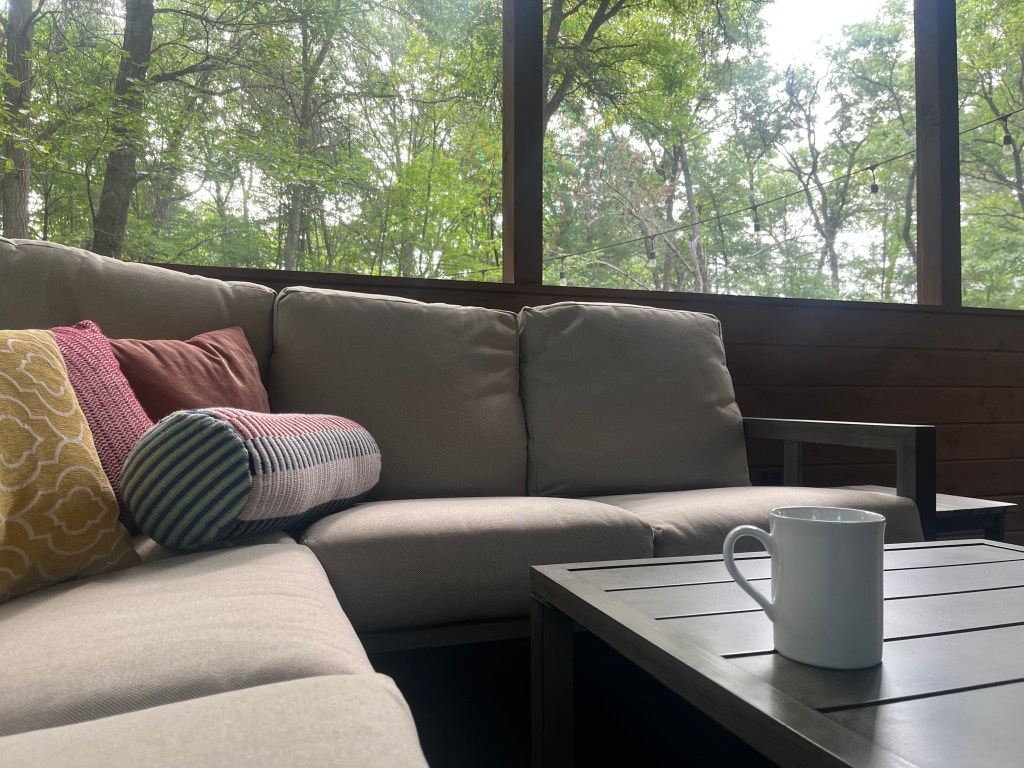
    Nine years ago, when we bought our home, it wasn’t the porch that sealed the deal. But, I kept coming back to it.

    Tucked away in the back, screened-in and shaded, it looked out over the trees with just enough distance from the noise of daily life. It wasn’t flashy, but it had a kind of quiet magnetism. I pictured myself there often: mornings with a cup of coffee, evenings with a book or a sipping drink and a long exhale.

    Reality, of course, looks a little different.

    Life happened: kids, work, dishes, sports practices, more dishes. I don’t sit on that porch as often as I imagined I would. But when I do? Something inside me realigns. Even 15 minutes on that porch, morning or night, makes the chaos a little quieter. It’s like a reset button for my soul.

    The Power of a “Porch Moment”

    Whether it’s a literal porch or something else entirely, we all need those in-between moments of stillness, bookends to our days. For me, the porch represents peace, intention, and reflection. The days that start and end out there? They just feel better.

    But, let’s be honest: I can’t always make it happen. The weather’s not always great. The weekdays can be brutal. And, more often than I’d like to admit, instead of the porch, I start and end my day with… my phone.

    Fifteen minutes of scrolling. News, emails, highlights, lowlights, someone’s breakfast, someone else’s breakdown. And just like that, my brain’s hijacked. Dopamine flooded. Focus fractured.

    Sound familiar?

    Science Has Something to Say

    Research backs up what we already know deep down: starting our day with screens (especially social media) spikes dopamine, disrupts natural cortisol rhythms, and increases anxiety and brain fog. It’s like pouring sugar in your gas tank and expecting the car to run better.

    But even small changes, like staying off screens for the first 15 minutes of your day, can significantly improve our focus, mood, and energy. That’s why I have been trying (emphasis on try) to create intentional “porch moments” even when I can’t physically sit outside. Below is a list I have come up with so far.

    Porch Moments: Anywhere, Anytime

    At Home (Morning):

    • Brew coffee without checking my  phone
    • Sit in silence or write down three things I’m grateful for
    • Read one page of something inspiring
    • Listen to the birds. Or the dishwasher. Whatever’s available

    At Work (Morning):

    • Arrive 10 minutes early and close my office door
    • Review my intentions for the day before opening my email
    • Breathe. Literally. Just… breathe

    At Home (Evening):

    • Put my phone to bed  before I go to sleep
    • Journal a win or a lesson from the day
    • Read. Stretch. 

    At Work (Evening):

    • Clear my desk. 
    • Reflect: What did I move forward today? What needs my attention tomorrow?
    • Write a quick “thank you” email or note to a colleague

    What’s Your Porch?

    Maybe it’s a cozy chair in the corner of your living room. Maybe it’s your commute, your morning run, or even the five quiet minutes after everyone else has gone to bed. It doesn’t have to be a picture-perfect place. It just has to be yours.

    And if you don’t have one yet? Carve it out. Start with five minutes. One deep breath. A step toward alignment.

    We live in a world that screams. Your porch whispers. So, go find it. Even if just for 15 minutes.

    I struggle with this daily. We’re all still learning.  Let’s keep growing: on purpose, and in alignment.

    Let’s connect, I’d love to hear what your “porch” looks like.


    Aligned Leadership | Lead With Purpose. Live With Alignment.

  • by Derrick Kunsman

    It started with a sting.

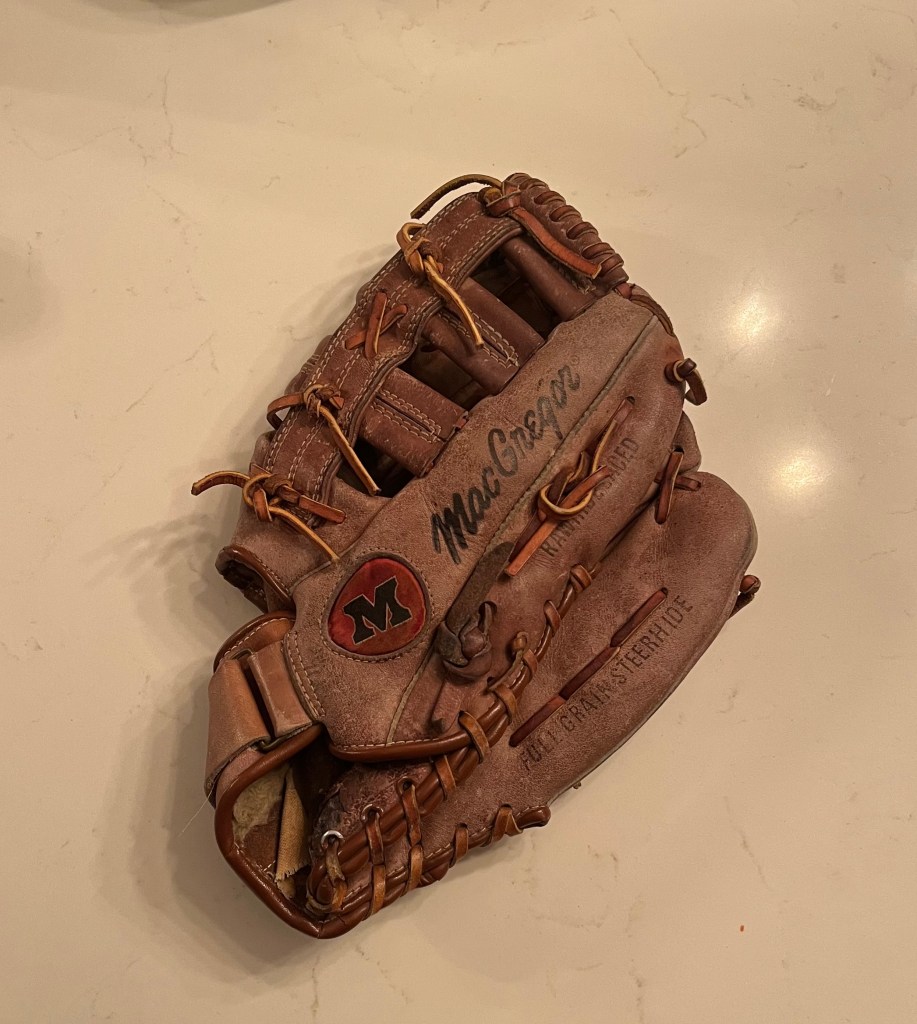
    My son had been throwing harder. And, lately, when we’d head outside to toss the baseball, it was less relaxing and more, well, painful. I kept catching his throws off-center, and each one sent a small zap through my hand. After a few tosses, I wondered: Maybe it’s time for a new glove.

    I’ve had this glove for years. It wasn’t flashy or new. It had character: creased leather, weathered laces, and just enough wear to tell stories. It had been gifted to me by my father-in-law, John, who, when asked about its provenance, replied with a grin, “Not an error left in it. Used way back in 1980 when I was playing fast pitch in Madison (Wisconsin) for Jack’s Shoes.”

    That glove had miles. But now it was stinging. So, I reached out to my friend Jeff at Gray Hair’s Glove Repair (yes, that’s really the name, highly recommend). He replaced the laces and gave it new life. But even after the refresh, the sting remained.

    Jeff gave me a simple suggestion: “Try catching it more in the webbing. Establish the pocket. Where you catch the ball can have an impact.”

    I didn’t need a new glove. I just needed a small adjustment. The glove stayed. The sting faded. My joy in playing catch returned.

    So What Does Any of This Have to Do with Leadership? 

    A lot, actually.

    In schools, businesses, nonprofits, you name it, we’re often so quick to throw out the old playbook and chase the next shiny thing. A new curriculum. A new system. A new initiative. A new “solution.” But, too often we don’t give things the time they need to work. Or, the consistency they require to improve.

    Stephen Covey called it “Sharpening the Saw.” The idea that we can’t just keep hacking at trees (or problems) without pausing to refine our tools: ourselves, our systems, and our strategies.

    The best leaders I know – those who build culture, grow people, and make an impact – aren’t constantly chasing novelty. They’re disciplined, they’re strategic, and they’re aligned. They focus on the few things that matter most, and they stick with them. They make adjustments where needed, but they don’t abandon what’s working just because it’s not flashy.

    Maybe what you’re building right now doesn’t need to be replaced. Maybe it just needs… a new lace. A better pocket. A small adjustment. And, a little more time.

    What Are You Catching Lately? 

    What’s stinging in your leadership right now? Is it time for something new, or are you simply catching things off-center?

    That glove from 1980 still works. And, so do a lot of the ideas, systems, and values we’ve held onto, if we’re willing to refine them, rather than replace them.

    What can you double down on? What small shift might change your whole experience?

    Let’s Keep the Conversation Going

    This space, Aligned Leadership, isn’t about having the answers. It’s a place where I’m sharing reflections from my own journey, most of which started in the margins of my journal. If they spark thought or connection for you, I’d love to hear it.

    We’re all still learning.

    Let’s keep growing: on purpose, and in alignment.


    Aligned Leadership | Lead With Purpose. Live With Alignment.

  • by Derrick Kunsman

    After a long Wisconsin winter, my garage was a disaster. Christmas boxes I never broke down. Salt and sand crusted into the floor. A random snow shovel. Broken kids’ toys. Junk piled in corners with the full intention of “dealing with it later.”

    If you’ve ever stood in your garage, hands on your hips, not even sure where to begin, you know the feeling. It’s not just a mess, it’s mental weight.

    And for me, until I deal with it, it nags. It distracts. It keeps me from fully focusing on anything else, because there’s always this background whisper: “You should clean the garage.”

    The Same Is True at Work

    That garage feeling? I get it when my email inbox is overflowing. When I’ve got stacks of paper on my desk. Half-finished to-do lists. Sticky notes with ideas I haven’t revisited in weeks.

    Even if I sit down with every intention of doing important, strategic, meaningful work, my brain won’t fully settle until I clear the clutter.

    Why the Clean Slate Matters

    Think about a surgeon. Before making a single move, the table is sterile. The tools are clean. Everything has its place. Why? Because focus is sacred when the work matters.

    And, your work matters. You lead people. You make decisions. You influence culture. But if your mental “workbench” is covered in piles, distractions, and disorganization, how can you give the most important things your best energy?

    From Garage to Leadership

    Cleaning my garage wasn’t glamorous. It wasn’t a transformational Instagram moment.
    It was gritty. Embarrassing, even. I let it pile up longer than I should have. But once I finally made time to get it back to a blank slate, everything changed:

    • I could breathe a little easier.
    • I wasn’t distracted walking in and out.
    • I had the margin to focus on what actually needed to be done.

    It made me ask, where else do I need to do this? At work? In my calendar?
    In my conversations?

    A Simple Challenge for You

    Take 30 minutes this week. Clean your desk. Clear your inbox.
    Make a list of the nagging tasks that are stealing your mental energy. Then, give them a place on your calendar. Schedule time to knock that nagging task out, make it an appointment. 

    Don’t do it to “be productive.” Do it to make space for what matters most.

    Aligned leadership isn’t about being perfect or always in control. It’s about being intentional. About showing up with clarity. And, about recognizing that sometimes, clearing the garage is the most important first step to doing meaningful work.

    If this hits home for you, I’d love to hear where your “garage” is right now. What are you clearing? What do you want more space for?


    Aligned Leadership | Lead With Purpose. Live With Alignment.